By Lauren Fichten
May 16, 2020
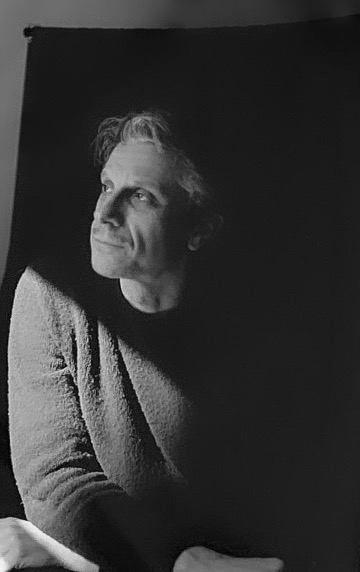
The ever-changing landscape of Manhattan’s 8th avenue is home to an array of spectacles and surprises.
From 59th to 12th street there is an abundance of restaurants, shops, and apartment buildings — some newly established, others that have been carved into New York’s iconic skyline for decades.
One of the most unassuming yet profound additions to 8th avenue is the private ballet studio of Fabrice Herrault. His former students grace the stages of theaters around the world and occupy the ranks of renowned companies including the American Ballet Theatre, New York City Ballet, Boston Ballet, and The Royal Ballet.
Yet, despite having produced (and continuing to produce) a plethora of talented dancers, Herrault continuously shies away from the spotlight.
“I’m really interested in the work,” he said. “I care about making good dancers and that’s it.”
Aside from his website, Herrault has never advertised his studio. Students find out about him predominantly by word of mouth.
Hailing from France, Herrault trained at the Paris Opera Ballet School and later, the Conservatoire National de Musique de Paris. He went on to dance with companies including the Hamburg Ballet, Les Ballets de Monte Carlo, Twyla Tharp and Dancers, and The Royal Winnipeg Ballet.
Herrault first became curious about teaching while dancing as a guest with a company in Italy, but a tear to his ACL when dancing at the Royal Winnipeg Ballet would challenge his ballet career and prove to be the catalyst for his new profession: teaching. With an impressive career under his belt and a deep understanding of ballet technique, Herrault was well-equipped to establish himself as an instructor in New York.
For years, Herrault held a popular open ballet class at Steps on Broadway that attracted students and professionals alike and taught at ballet companies and schools around the world. But the establishment of his private studio in 2007 would be his ultimate endeavor.
“This is the dream of a teacher— to be in Manhattan and have a studio where you can train professional dancers,” he said.
Most dancers who attend Herrault’s studio train with him privately six days a week. Students begin at the barre, moving through a set of memorized combinations, and then progress to the centre where they continue to work on combinations and variations from full-length ballets.
Ballet students typically train and rehearse for four to five hours a day, but at Herrault’s studio, the intensity of private training warrants a two-hour time limit. His classes are technically and artistically demanding and his combinations are often arduous, emphasizing repetition, precision, placement, and strength.
Claudia Schuman, a former student of Herrault who trained with him at the American Ballet Theatre’s Jacqueline Kennedy Onassis School and for two years privately, said that training at his studio taught her to how to push her limits.
“It taught me so much about willpower and that if you can put your mind to it and just get through it you have the capability,” she said.
Though training with Herrault resulted in a deeper understanding of technique and awareness of movement for Schuman, she recalled the difficulty of remaining consistent and noted that it was challenging at times to bring his vision to life.
“Being able to do these extreme things but also being classical and pure and being able to harness both of those qualities is tough,” she explained.
The demanding nature of the training is a result of Herrault’s own personal experience.
“I wouldn’t call myself a natural dancer, it became more natural with work,” he said. “I think it’s very rare that someone might feel like it’s easy.”
Though Herrault’s goal is to produce strong dancers, he said that the ultimate takeaway for his students transcends technique and even ballet.
“For me, it’s important to make the person grow as a human being,” he said, noting his emphasis on steering students toward personal growth and establishing confidence.
“A teacher is a guide,” he said. “That’s what they do — that’s why they’re so important. You can’t do it on your own.”
Despite Herrault’s emphasis on repetition and establishing a strong technical foundation, he said that he strives to produce dancers who are generous, genuine, and move beautifully in space.
“To me, a great dancer is a person who is a very good mover,” he said. “People who are really connected with the music, the space, with themself, of course, and really expressing the movement with their body. Sculpting space. Sculpting images in space.”